
Criminal Court Records in Burke County
A criminal court record is the case-level file kept after a criminal matter reaches court. In Burke County, the Clerk of Superior, State and Juvenile Court is the key records office for Superior Court felony cases and State Court misdemeanor or traffic-criminal cases. The clerk's office is led by Radeta G. Smith and is located at the Burke County Judicial Center, 200 East 6th Street, Waynesboro, Georgia.
Superior Court is the general-jurisdiction trial court for felony cases in the Augusta Judicial Circuit. State Court handles misdemeanors, traffic cases, preliminary hearings, and applications for arrest or search warrants. Magistrate Court handles bond hearings, preliminary hearings, arrest and search warrants, and certain county ordinance or bad-check matters. City citations may be in a municipal court for Blythe, Girard, Keysville, Midville, Sardis, Vidette, or Waynesboro. Federal criminal cases for Burke County are separate and use the U.S. District Court for the Southern District of Georgia.
The U.S. Attorney's Office Southern District of Georgia map places Burke County in the Augusta Division for federal prosecution context.
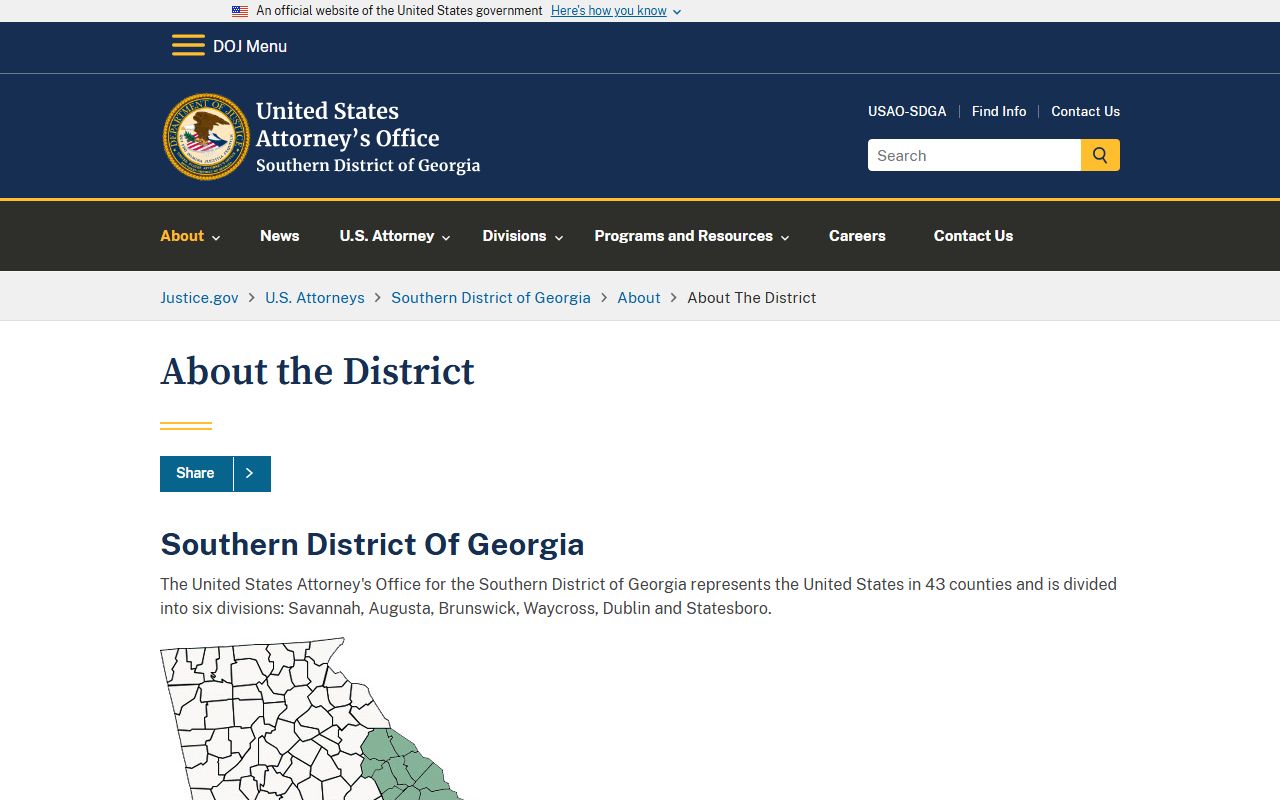
That federal source helps separate county criminal files from federal prosecutions that do not use the Burke clerk's local case channels.
How to Search Burke County Criminal Court Records
Start with the official Burke Clerk Case Search for local Superior and State Court criminal case access. Research confirmed the official link but found that the portal did not render reliably in the capture browser. If it loops or fails, use the clerk counter, phone, mail, or email channel rather than guessing from unofficial data.
- Identify the court from the charge, ticket, warrant number, jail roster, hearing notice, or prosecutor contact.
- Try the official Burke Clerk Case Search for Superior Court and State Court case information.
- For an eligible citation, use PayYourTix only after the citation has been processed by the Clerk's Office.
- Open the docket or request clerk help to confirm charges, pleas, disposition, and sentence.
- Request a certified copy from the Clerk of Superior, State and Juvenile Court if a certified disposition or sentence is required.
For custody status, use the inmate records path, not the criminal case file alone. For warrant status, use the warrant records path and confirm with the issuing court or Sheriff's Office. For arrest-to-charge details that may differ from final case results, compare the criminal file with court charge records.
Stages of a Criminal Case
A Burke County criminal file can begin with an arrest, citation, warrant, accusation, indictment, or transfer from a lower proceeding. The court record then tracks hearings and written filings. A felony case may begin with arrest and warrant activity, then move to Superior Court through indictment or accusation practice. A misdemeanor or traffic-criminal case may remain in State Court, while a preliminary or bond matter may appear in Magistrate Court before a higher-court filing.
Case flow: Charges Filed › Arraignment › Pretrial / Motions › Plea or Trial › Disposition › Sentencing
| Stage | What Happens |
|---|---|
| Arraignment | The defendant is called before the court and a plea may be entered. |
| Pretrial / Motions | Attorneys file motions, request hearings, resolve discovery issues, or ask the court for rulings. |
| Plea or Trial | The case resolves by plea, bench or jury trial, dismissal, transfer, or another court order. |
| Sentencing | The court enters punishment, probation, fines, conditions, custody credit, or other sentence terms after conviction. |
What a Burke County Criminal Court Record Shows
Criminal records can include arrest-linked charges, accusations, indictments, warrants, bond, docket entries, pleas, orders, dispositions, sentences, and probation violations. The inmate roster can show charge-level details such as warrant number, statute, description, misdemeanor or felony marker, court, total bond, and arresting agency, but the court file is the place to confirm the final legal outcome.
| Field | What It Shows |
|---|---|
| Case Number | The court's tracking number for the criminal file or related citation. |
| Defendant | The adult defendant's name and related party information, subject to redaction rules. |
| Charges | The accusation, indictment, citation, warrant-based charge, statute, or amended charge before the court. |
| Plea | The defendant's formal answer, such as guilty, not guilty, or another plea recognized by the court. |
| Disposition | The result, including dismissal, guilty plea, verdict, transfer, sentence, or other final action. |
| Sentence | Custody, probation, fines, conditions, and other court-ordered penalties when a conviction occurs. |
The U.S. Bankruptcy Court for the Southern District of Georgia is included because bankruptcy can intersect with criminal fines, restitution, and federal court research, while still remaining outside Burke County's local criminal file system.
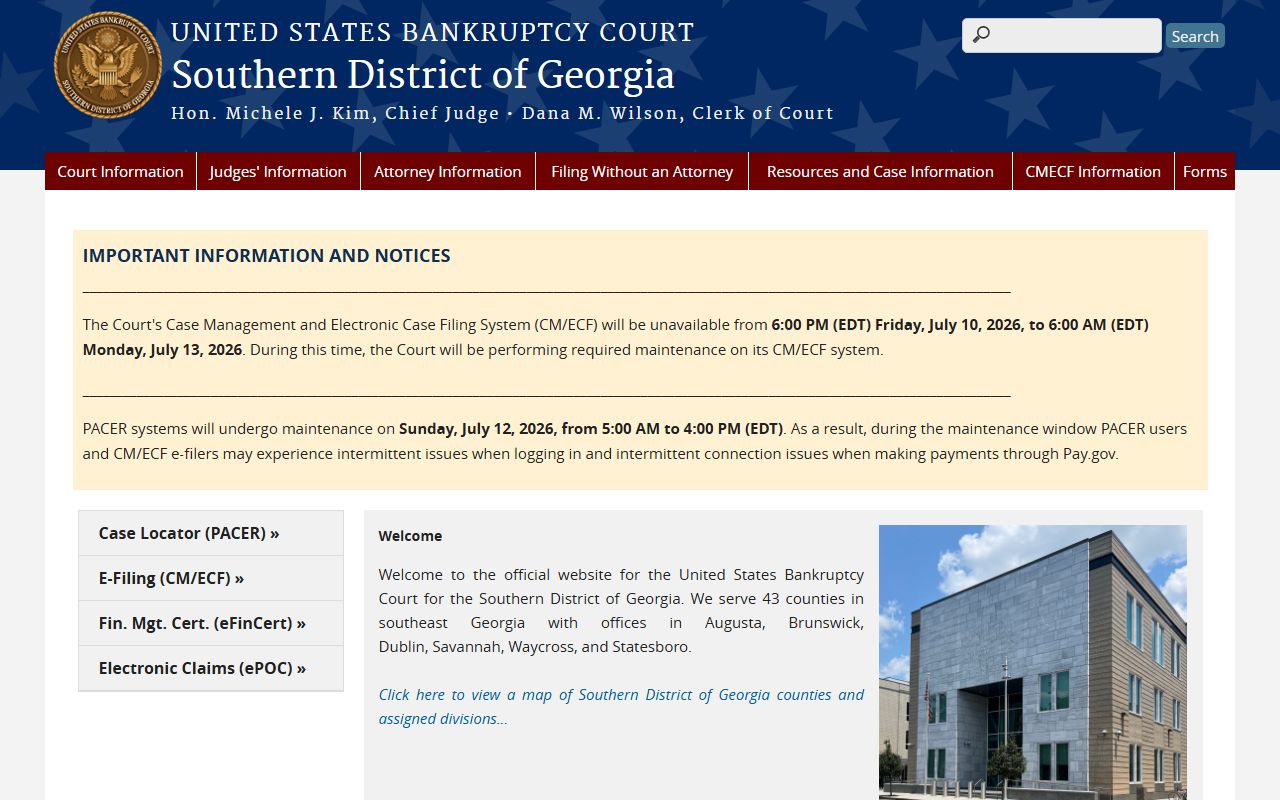
County criminal case files, bankruptcy records, and federal district records use different clerks and different electronic systems.
Charges vs. Convictions
A charge is an allegation or count filed against a person. A conviction is a final result after a guilty plea, verdict, or other conviction entry. A Burke County criminal record may show charges that were dismissed, reduced, amended, transferred, or resolved without a conviction. Recent local reporting about altered or changed charges underscores the practical point: booking charges, court charges, solicitor or district attorney decisions, and final dispositions can diverge.
| Charge | Conviction | |
|---|---|---|
| Stage | Accusation, indictment, citation, warrant, or booking-linked allegation | Final court outcome after plea, verdict, or adjudicated resolution |
| Burden of Proof | Often tied to probable cause or prosecutor filing decision | Requires proof beyond a reasonable doubt or a legally accepted plea |
| Public Record | Often visible unless restricted, sealed, juvenile, or otherwise confidential | Often visible unless restricted, sealed, juvenile, or otherwise confidential |
Reading Dispositions and Sentences
Disposition language should be read carefully. Guilty, not guilty, dismissed, nolle prosequi, acquitted, transferred, probation violation, order to show cause, and sentence entries can mean different things depending on the stage of the case. A jail roster bond value such as a dollar amount, "NOT SET," or "DENIED" does not prove the final disposition. It reflects custody status at that point in time.
Sentencing entries may include jail or prison time, probation, fines, restitution, court costs, conditions, license consequences, or program requirements. The Augusta Judicial Circuit includes programs such as Drug Court and Alternative Dispute Resolution in appropriate case contexts, and domestic cases involving children can involve a Divorcing Parents Seminar. Those programs may appear as docket or order entries, but the final order controls the obligation.
The federal PACER CM/ECF lookup for Georgia Southern Bankruptcy Court shows how federal records use federal electronic filing paths rather than Burke County's local clerk portal.
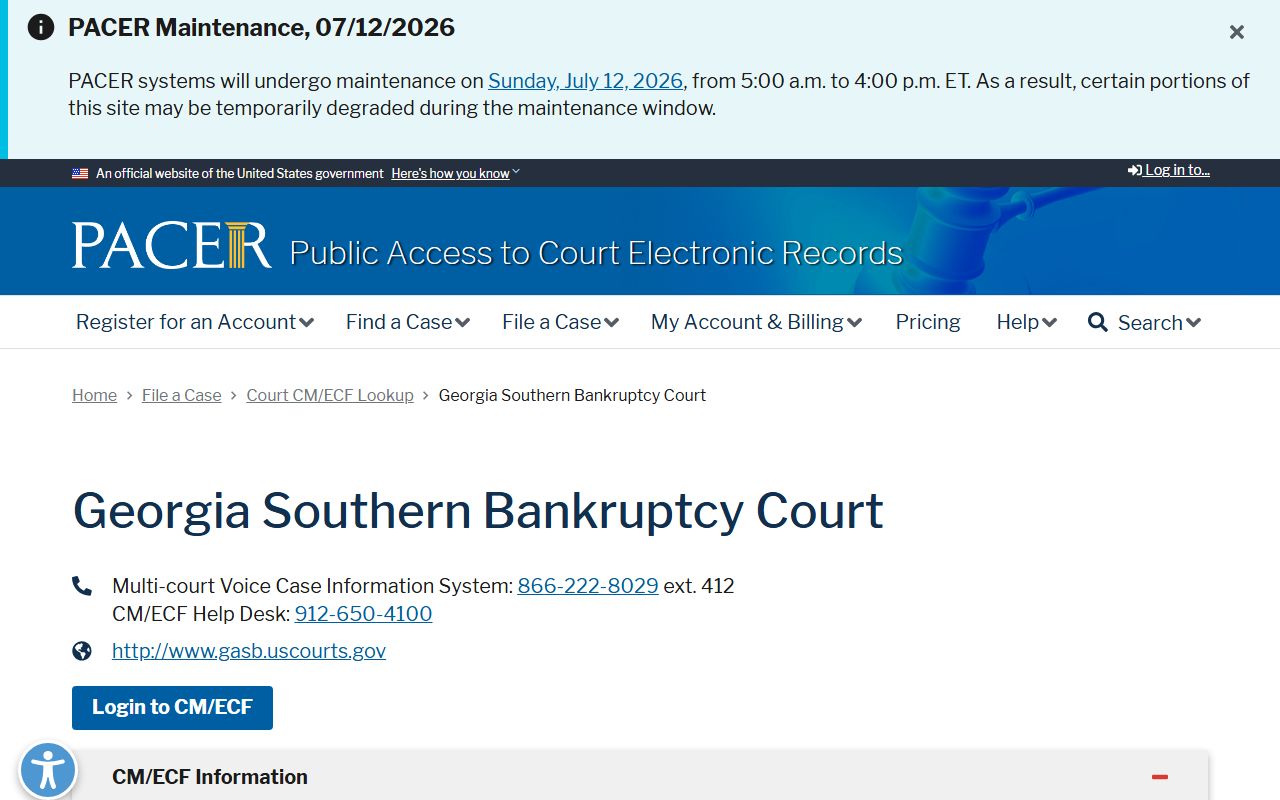
When a search crosses from county court into federal court, PACER and the federal clerk directory become the authoritative access path.
Sealed vs. Expunged Records
Georgia commonly uses the term record restriction for many criminal-history access limits. O.C.G.A. § 35-3-37 governs eligible criminal-history restriction and related court or law-enforcement records. Sealing and restriction do not always erase the record for every purpose; criminal justice agencies and some authorized employers or regulators may still have access where law allows.
| Sealed or Restricted | Expunged | |
|---|---|---|
| Visibility | Hidden or limited from ordinary public access by statute or court order | Georgia research supports record restriction terminology for many cases, not a broad claim that every record is destroyed |
| Law Enforcement | May still be available for criminal justice or other authorized legal uses | Depends on the governing statute and order, so the clerk or counsel should confirm effect |
| Eligibility | Depends on charge, disposition, timing, prosecutor or court review, and statutory criteria | No blanket eligibility rule was located for all Burke County criminal files |
Public Access to Criminal Court Records
Georgia's Open Records Act supports access to public records unless an exemption, statute, or court order applies. Court files are also subject to court sealing rules, including Uniform Superior Court Rule 21 practice for restricting public access by proper court process. In Burke County, the practical starting point is the office that maintains the record: the clerk for court files, Magistrate Court for certain warrant and preliminary matters, the Sheriff's Office for custody records, and municipal courts for city cases.
Key Statutes:
O.C.G.A. § 50-18-70 declares Georgia's public policy favoring access to public records unless legally exempt.
O.C.G.A. § 50-18-72 identifies categories that may be exempt from disclosure, including records made confidential by law.
The U.S. Court of Appeals for the Eleventh Circuit is the federal appellate path for Southern District federal cases, separate from Georgia state appeals.
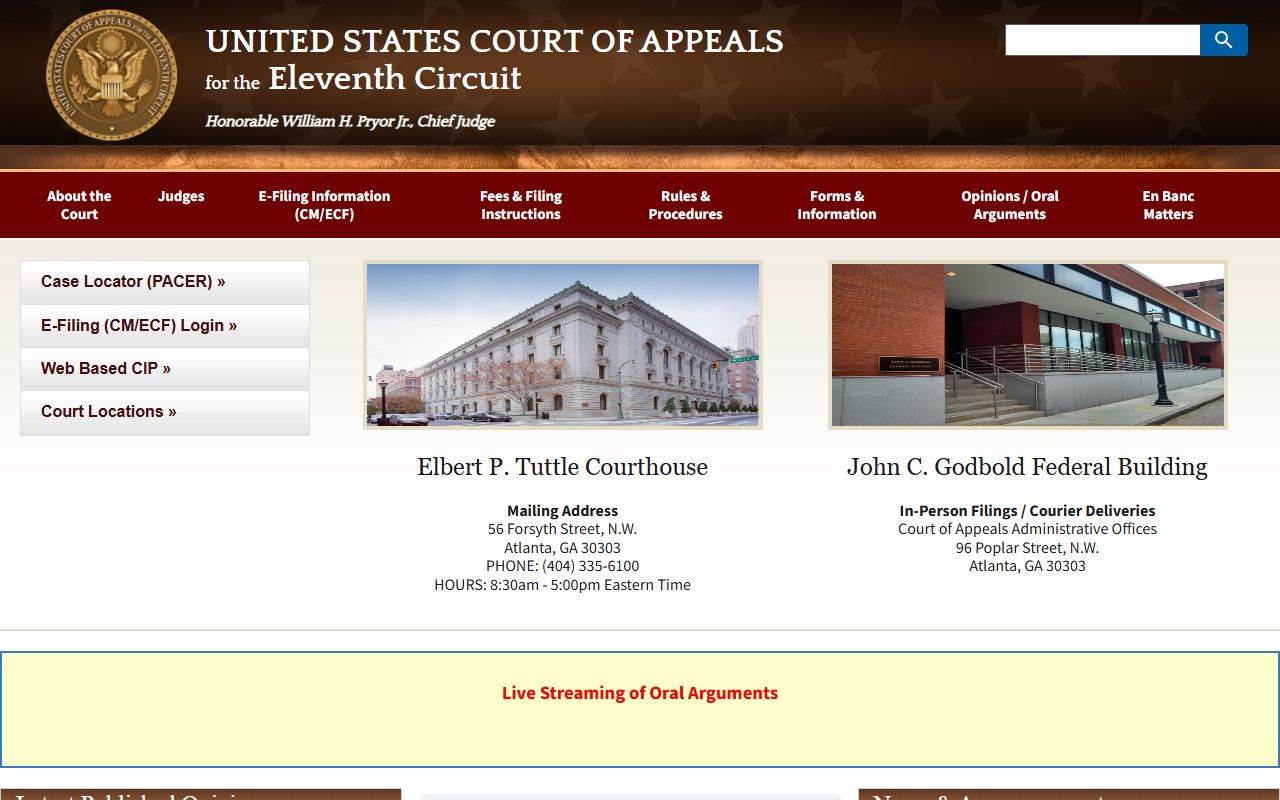
State criminal appeals from Burke County follow Georgia appellate channels, while federal appeals use the Eleventh Circuit.
Background Check Considerations
A public criminal case lookup is not the same as a legally compliant employment, tenant, credit, insurance, or licensing background check. Court records can be incomplete, restricted, amended, or misread without the full file. A person who needs an official disposition should request it from the Clerk of Superior, State and Juvenile Court or the appropriate court custodian. A person who needs statewide criminal-history information may need a proper law-enforcement or GBI-supported channel rather than a single county docket.
Important: This private site is not a consumer reporting agency and cannot be used for FCRA-regulated decisions.
Restricted Criminal Court Records in Burke County
Restricted criminal records include sealed matters, juvenile records, certain record-restriction cases, protected victim information, personal identifiers, medical details, and files limited by court order. Juvenile Court access is especially limited. Burke County's Juvenile Court page states that sealing may be requested by a person age 17 or older after at least two years from final discharge if the person has no later conviction or adjudication and no pending qualifying charges.
For federal cases, use the U.S. District Court for the Southern District of Georgia, the Augusta courthouse, PACER, or the appropriate federal clerk office. The Augusta Division clerk phone listed in the research is 706-849-4400, while the Eleventh Circuit Atlanta clerk's office is listed at 404-335-6100. Those federal contacts do not replace the Burke clerk for local Superior and State criminal records.
The Eleventh Circuit's Atlanta clerk office page provides federal appellate location and phone context for cases that leave the Southern District federal trial court.
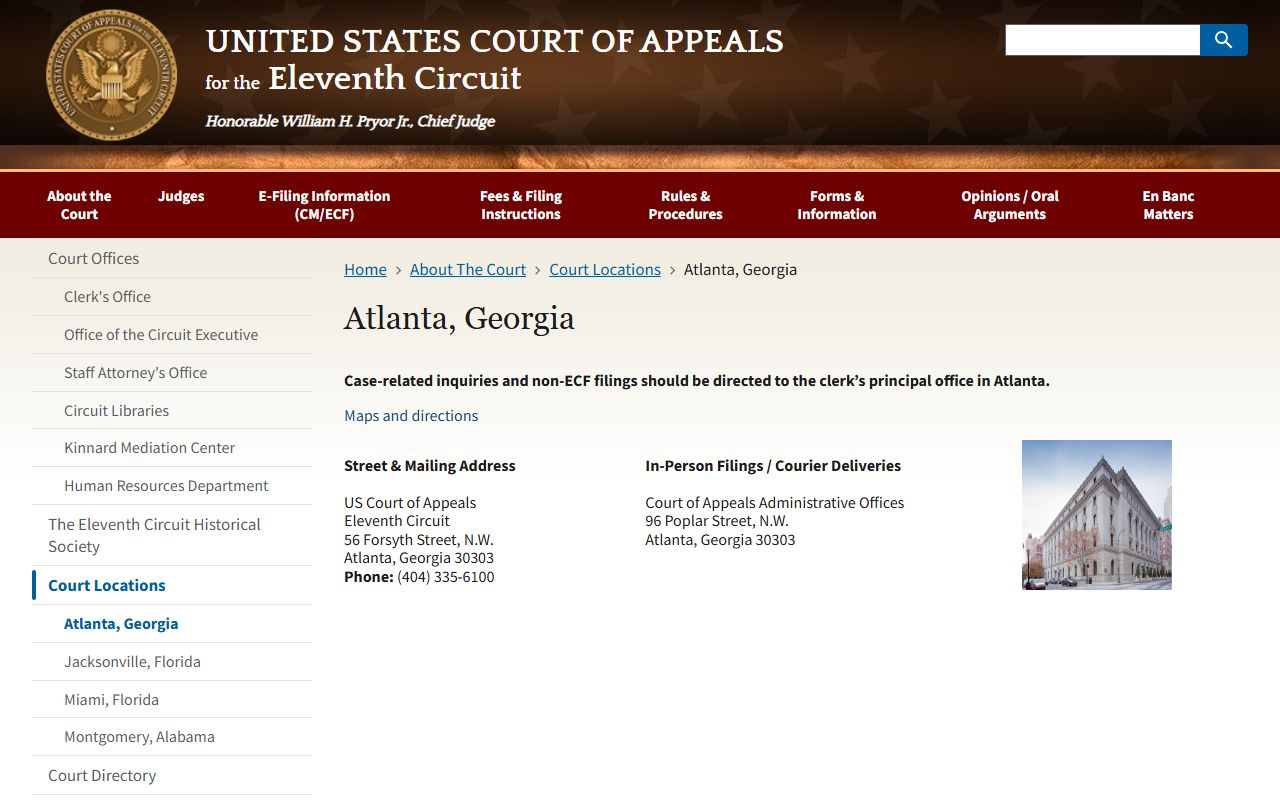
That source is relevant only for federal appellate records, not ordinary Burke County Superior or State Court criminal files.
Public Record Search
Sponsored Results