
Burke County Arrest Records and Court Charges
Burke County arrest records are first created on the law-enforcement side. The Sheriff's Office and other arresting agencies record the name, arrest date, status, sex, height, weight, address, total bond, arresting agency, days in jail, and charge rows when a person is booked into the Burke County Jail. The official current roster also shows warrant number, count, Georgia statute, charge description, misdemeanor or felony marker, and court. Those fields show why arrest records are useful, but they are not the same as a final court outcome.
Court charges after arrest move through the court system. Felony charges are prosecuted by the District Attorney in Superior Court. Misdemeanor and traffic charges are handled through State Court and the Solicitor-General. The Clerk of Superior, State and Juvenile Court keeps the court file once a case is opened. Booking detail belongs with the Burke County inmate records, while the final plea, disposition, and sentence belong in the Burke County criminal court records.
The Sheriff's Office app announcement is shown in the official Burke County Sheriff's Office mobile app notice.
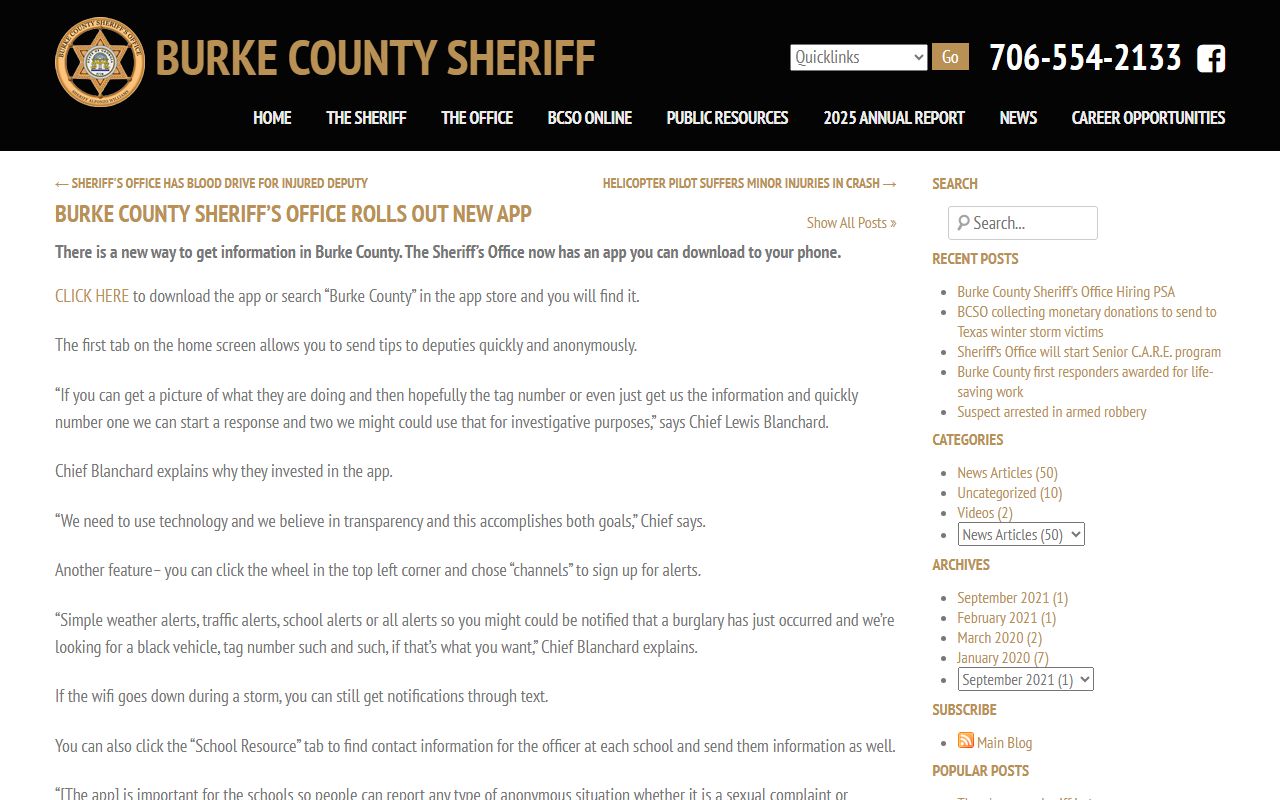
The app source helps identify official Sheriff's Office communication channels, but the research did not confirm an app-only Burke County Georgia arrest or warrant lookup.
How to Find Burke County Arrest Records and Charges
Start with the source that matches the question. Current custody and booking charge rows are checked through the Sheriff's inmate inquiry and the official-linked current inmate roster. Case-level charge filings are checked through the Clerk's Case Search, though research found that the public link may be unstable in some browsers. If the portal does not load, call or visit the Clerk of Superior, State and Juvenile Court.
- Check the current inmate roster first if the arrest may be recent or the person may still be in jail.
- Record the exact name, arresting agency, warrant number, statute, court, bond status, and arrest date shown on the roster.
- Use the Clerk's case search or Clerk counter to locate the matching Superior Court or State Court case.
- Read each charge line for the statute, misdemeanor or felony marker, court, count, and current status.
- Ask the Clerk for a certified copy if the charge record must be used in a legal filing or official review.
State-level searches answer different questions. The Georgia Department of Corrections offender query is for people in GDC custody or under GDC supervision, not for every Burke County arrest. Georgia.gov also says county-jail inmates should be found through county sites. For sex-offender status, use the Sheriff's registry page and the GBI registry rather than treating a jail charge row as a registry record.
The Georgia offender search guide separates state prison searches from county jail lookups.
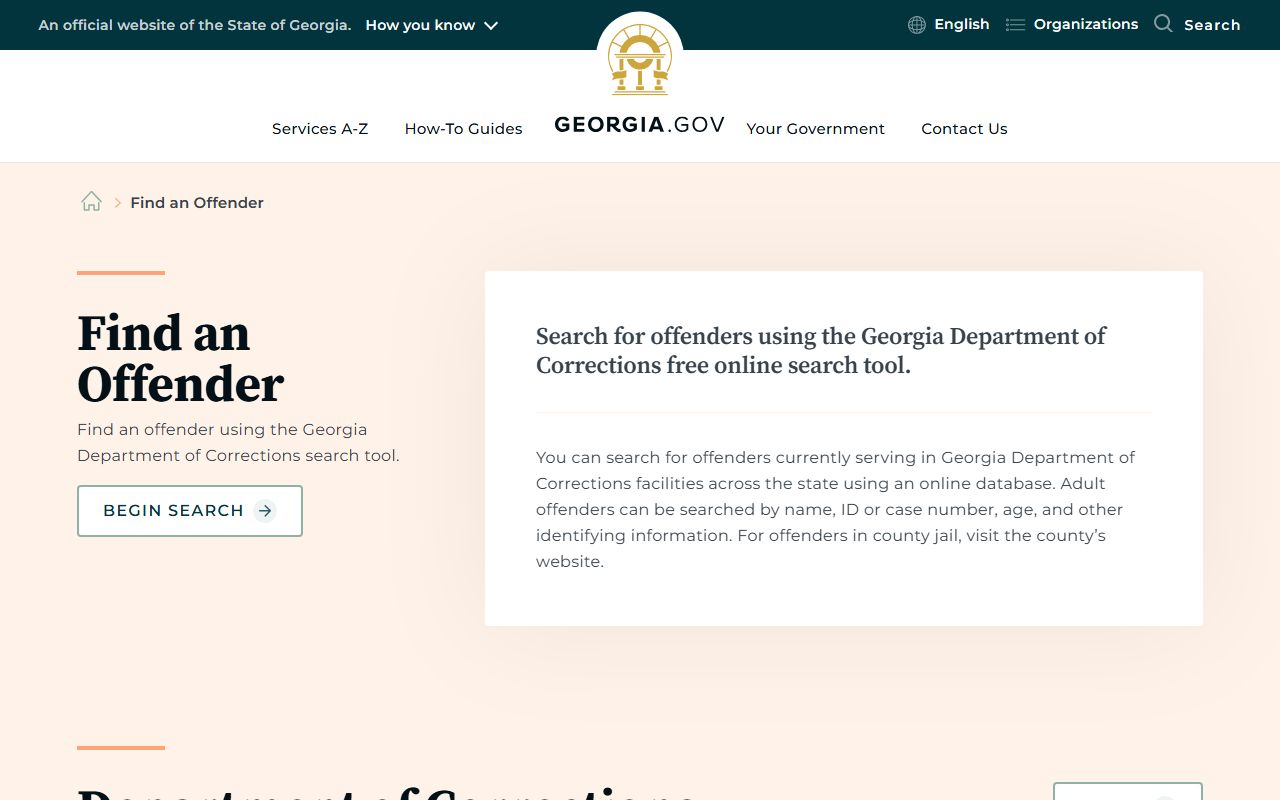
That distinction matters because a person can have Burke County court charges after arrest without appearing in the state prison database.
Charges Filed After a Burke County Arrest
A booking charge can come from the arresting agency, a warrant, a bench warrant, an indictment, or another court order. The prosecutor then decides how the charge will proceed. In Burke County, the District Attorney handles felony prosecutions in Superior Court, while the Solicitor-General handles State Court misdemeanors and traffic matters. The court file may use an accusation, indictment, complaint, warrant application, order to show cause, or other filing, depending on the court and charge type.
| Complaint | Information | Indictment | |
|---|---|---|---|
| Filed By | Officer, prosecutor, or court applicant depending on the matter | Prosecutor when allowed by Georgia procedure | Grand jury |
| Common For | Warrant applications, lower-court matters, and initial allegations | Formal prosecutor-filed charges where used | Felony charges in Superior Court |
| Record Role | Shows the allegation that starts court review | States the prosecutor's selected charge | Shows grand-jury action on felony accusations |
The charge document should be read with the docket. A single arrest may produce several counts, and each count can move differently. Some charges stay pending. Some are reduced. Others are dismissed or changed before plea or trial. News coverage of Burke County charge changes makes that distinction especially important, but only the official court and prosecutor records can confirm the legal status of a specific case.
For local context, WRDW reported that Augusta Circuit judges and the District Attorney stepped aside in sheriff-related matters.
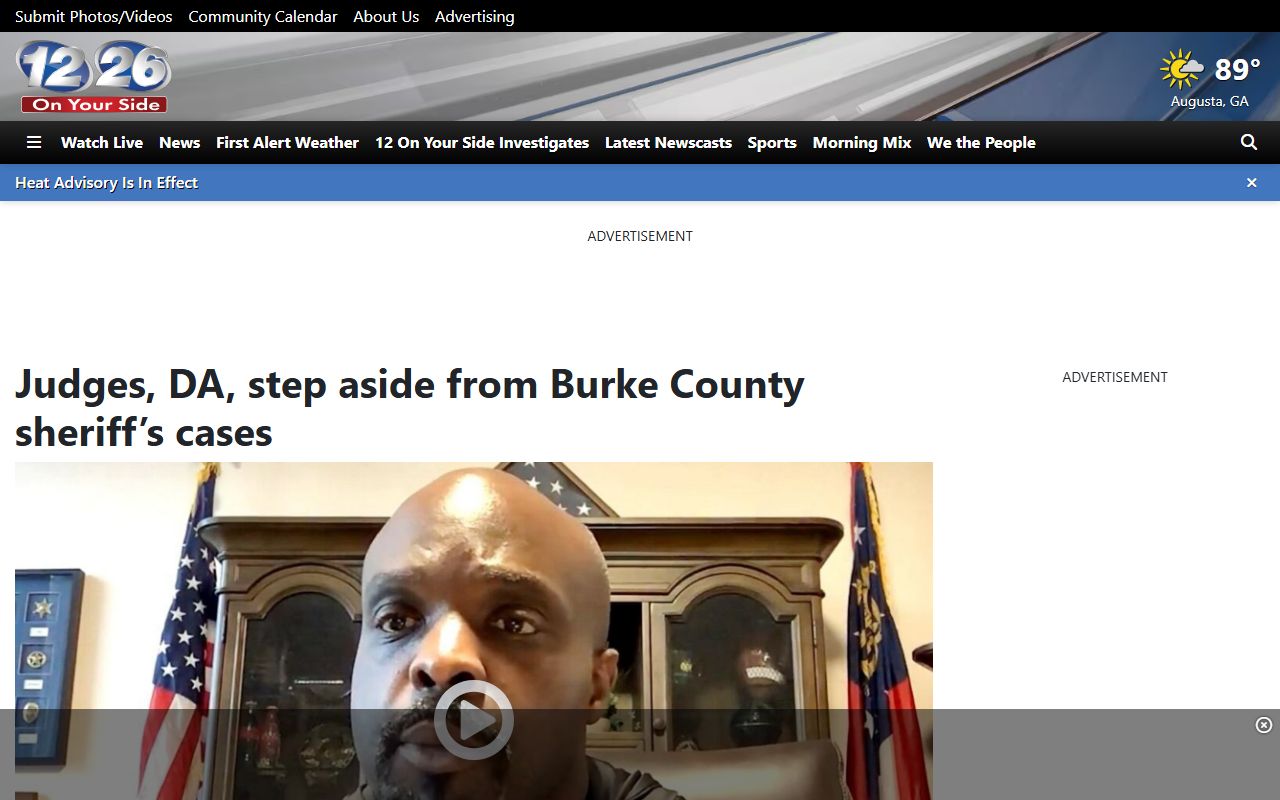
That report is background only. It does not replace the Clerk, prosecutor, or court record for a named defendant.
Burke County Charge Status Terms
Charge status is the part of the record that tells whether an allegation is still active, changed, or closed. The Burke roster may show charge description, statute, court, bond, and warrant number, but the final status usually comes from the court file. Georgia court records may show a plea, disposition, sentence, dismissal, or prosecutor action. A pending charge is not a conviction. A dismissed charge may still appear in older booking or docket material unless access is later restricted.
| Status | What It Means |
|---|---|
| Pending | The charge has been filed or booked and has not reached a final disposition. |
| Amended / Reduced | The prosecutor or court changed the charge, count, level, or wording before final outcome. |
| Dismissed | The court record shows the charge was ended without a conviction on that count. |
| Nolle Prosequi | The prosecutor chose not to pursue the charge further, subject to the court record. |
| Probation Violation | The case concerns alleged noncompliance with an existing probation sentence. |
WRDW later reported on an appointed outside prosecutor in a Burke County Sheriff's Office investigation.
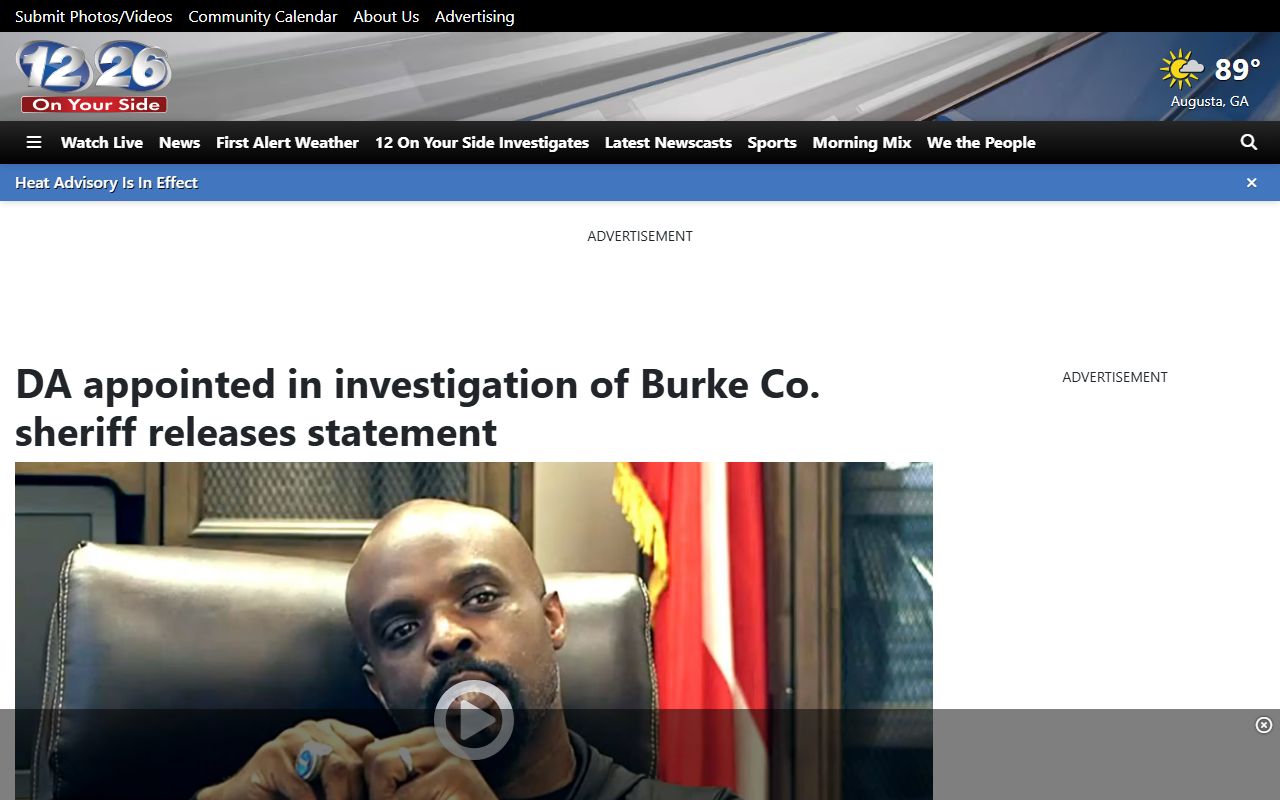
For a specific arrest record, use that kind of reporting only as context and verify the charge status with the issuing court or prosecutor.
Burke County Charges vs. Convictions
Being arrested or charged means the government has made an allegation. A conviction means the allegation was proved by guilty plea, verdict, or another legally recognized outcome. Burke County arrest records can show serious allegations, bond status, and court assignment before the case is resolved. The criminal court record is needed to learn whether the charge ended in conviction, dismissal, acquittal, plea, sentence, or another disposition.
| Charge | Conviction | |
|---|---|---|
| Stage | Accusation | Verdict or plea |
| Burden of Proof | Probable cause | Beyond reasonable doubt |
| Public Record | Often visible unless sealed, juvenile, or restricted | Often visible unless sealed, juvenile, or restricted |
| Where to Confirm | Roster, warrant line, prosecutor filing, or court case | Final court disposition and sentence record |
Restricted Burke County Charge Records
Georgia often uses the term record restriction for criminal-history access limits. O.C.G.A. § 35-3-37 governs restriction of certain criminal-history information and related law-enforcement or court records when the statutory requirements are met. Juvenile matters follow a separate process. Burke County Juvenile Court states that a person age 17 or older with a prior delinquent or unruly adjudication may seek sealing after at least two years from final discharge if no new qualifying conviction, adjudication, or pending charge exists.
| Sealed or Restricted | Expunged | |
|---|---|---|
| Visibility | Limited from public view by statute or court order | Georgia criminal records more often use restriction language than full destruction |
| Law Enforcement | Criminal justice agencies may retain access where law allows | Access depends on the governing order and statute |
| Eligibility | Depends on disposition, age, charge type, and court order | Not assumed from a dismissal alone |
Personal identifiers, victim information, medical data, sealed files, and some investigation records may be withheld or redacted under Georgia open-records exemptions. Juvenile arrest and charge records should not be treated like adult public dockets.
Burke County Charge Codes and Courts
The Burke jail roster uses Georgia statute numbers and a misdemeanor or felony marker. Research examples included statutes such as 16-5-23.1, 16-10-24(A), 16-11-37, 40-5-121, 42-8-38, and 17-6-12. The roster also shows courts such as Superior Court and State Court. That court field is a key clue because Superior Court handles felonies, while State Court handles misdemeanors, traffic, preliminary hearings, and applications for arrest or search warrants.
One arrest can produce more than one count. A person may have a traffic charge, a misdemeanor, a probation matter, and a felony hold listed under the same custody entry. The "M/F" marker helps separate misdemeanor from felony allegations, but it does not prove the final offense of conviction. Check the Clerk's file for later amendments and final disposition.
WRDW's budget-hearing coverage is part of the broader public context around the Sheriff's Office and county government.
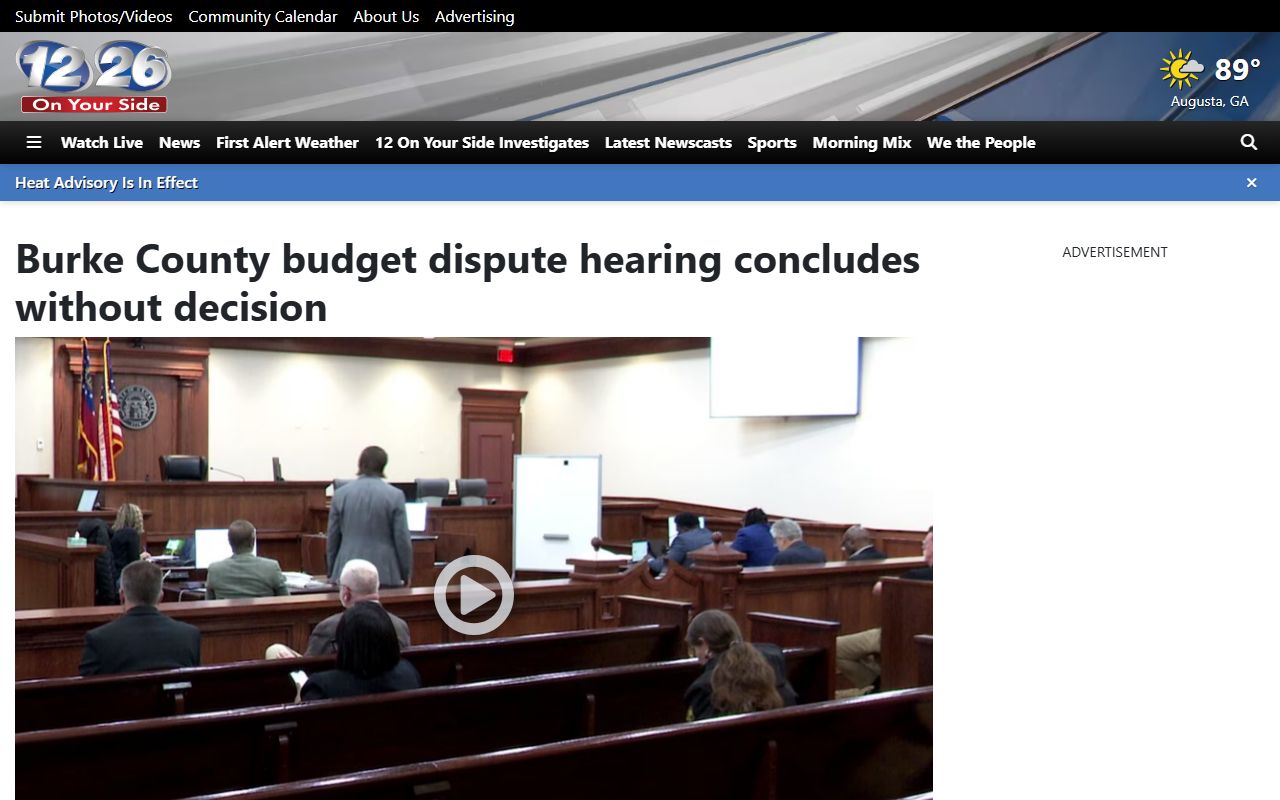
Budget litigation does not change how a charge is verified: the official court, sheriff, and prosecutor records control the record status.
Statewide Criminal History Limits
Statewide systems can help, but each one has a defined scope. The GDC offender query is for state correctional records. The GBI sex offender registry is for registry status. GSCCCA searches statewide clerk indexes for real estate, liens, plats, UCC, notary, and PT-61 records rather than full Burke County criminal case files. Georgia Open Records Act requests can be used with the custodian that keeps the record, but O.C.G.A. § 50-18-72 and court orders can limit release.
For Burke County arrest records, the most direct chain is still local: Sheriff's Office for custody and booking, Clerk for court filing and disposition, District Attorney for felony prosecution, and Solicitor-General for misdemeanor and traffic prosecution. The Prosecuting Attorneys' Council lists the District Attorney at 735 James Brown Boulevard, Suite 2400, Augusta, GA 30901, phone 706-821-1135, and the Solicitor-General at 195 Court Street, Waynesboro, GA 30830, phone 706-437-0464.
Background Check Considerations
An arrest lookup is not the same as a regulated background report. A roster result may show a person currently booked, while a court file may show charges that later changed. Employers, landlords, insurers, lenders, and screening companies must follow the Fair Credit Reporting Act and any state rules that apply to consumer reports. A casual review of Burke County public records should not be used as a substitute for a compliant background-check process.
Important: Burke County arrest records must be verified with official custodians before any legal, employment, housing, or licensing decision.
WRDW reported allegations involving altered charges in a Burke County Sheriff's Office investigation story.
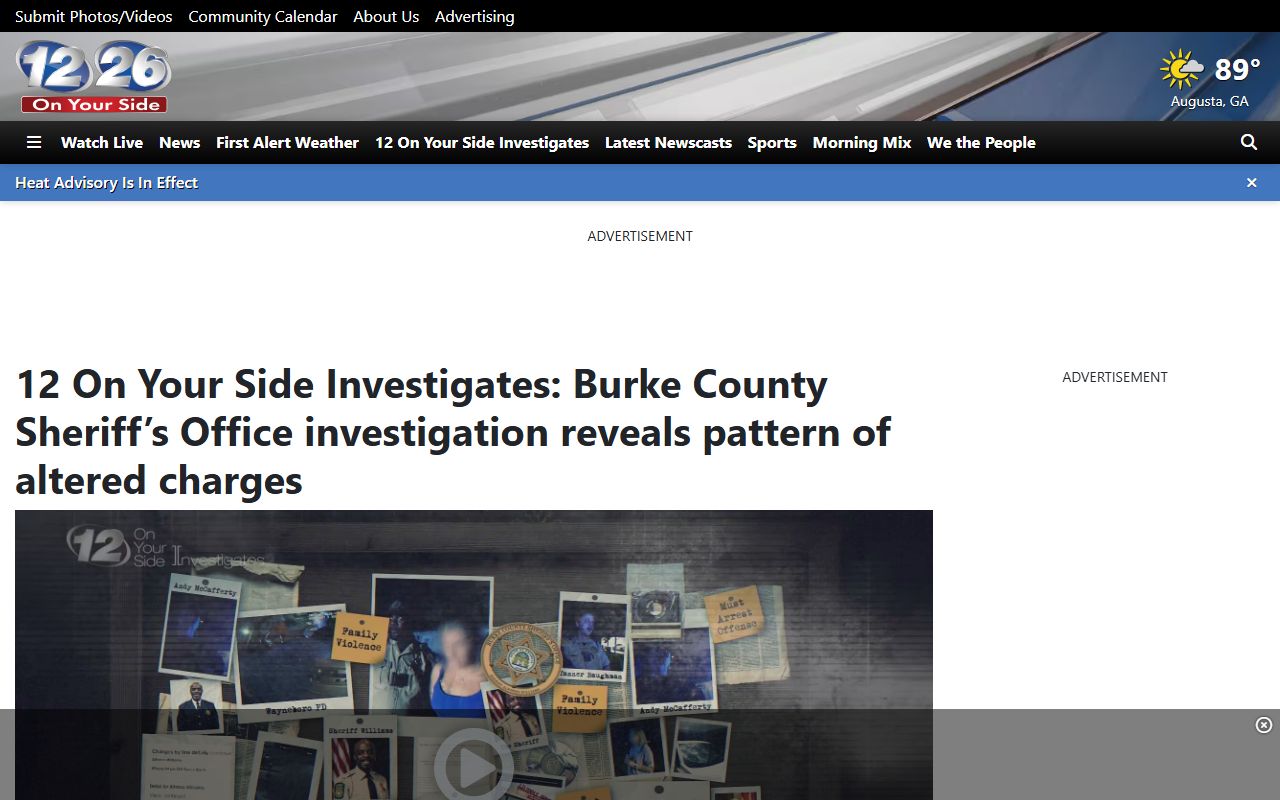
That source underscores why booking language, prosecutor filings, and final court dispositions should not be treated as the same record.
Restricted Charge Records in Burke County
Not every charge record is open in full. Juvenile Court receives matters involving persons under 17, including juvenile traffic citations, and juvenile access is restricted. Sealed or restricted criminal records may be limited under O.C.G.A. § 35-3-37, Uniform Superior Court Rule 21, first-offender provisions, or a court order. Medical information, Social Security numbers, financial account numbers, victim information, and minor identifiers should be redacted from public copies.
If a charge does not appear online, the next step is not an unofficial aggregator. Contact the office that maintains the record. For court charges, use the Clerk of Superior, State and Juvenile Court. For custody status, use the Sheriff's Office. For active warrant process, use Magistrate Court, State Court, or the issuing municipal court. Georgia's Open Government law page explains the general public-records framework, but it does not override sealed, juvenile, or safety-related limits.
Public Record Search
Sponsored Results